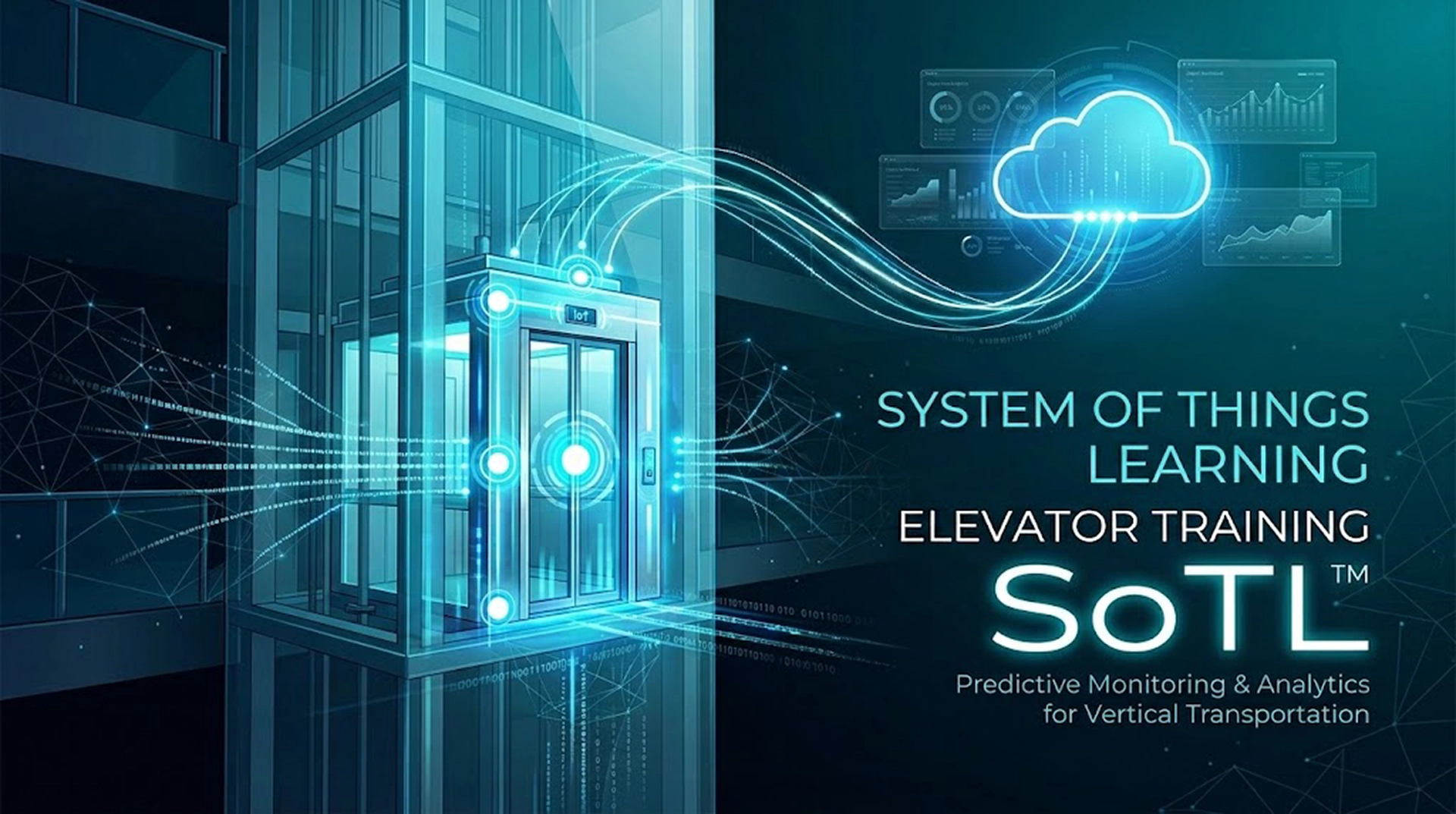
How SoTL™ Works
Advanced Predictive Monitoring for Vertical Transportation & In-Motion Equipment

Key SoTL™ Features & Capabilities
-
Unified Pipeline: Connects field hardware directly to building owners, facility managers, and service teams through a single architecture
-
Baseline-Centric Intelligence: Analyzes behavior (e.g., car runs, door cycles, vibration, and releveling) against each individual unit’s historical baseline rather than fixed fleet thresholds
-
Field-Resilient Architecture: Retains and buffers motion data during power loss or network outages, automatically catching up once connection is restored
-
Zero-Trust Security: Features outbound-only communications with issued cryptographic device identities, eliminating the need for open inbound network ports
-
Role-Based Value: Delivers summary insights for building owners while exposing deep diagnostic evidence for service mechanics
2. How SoTL™ Works
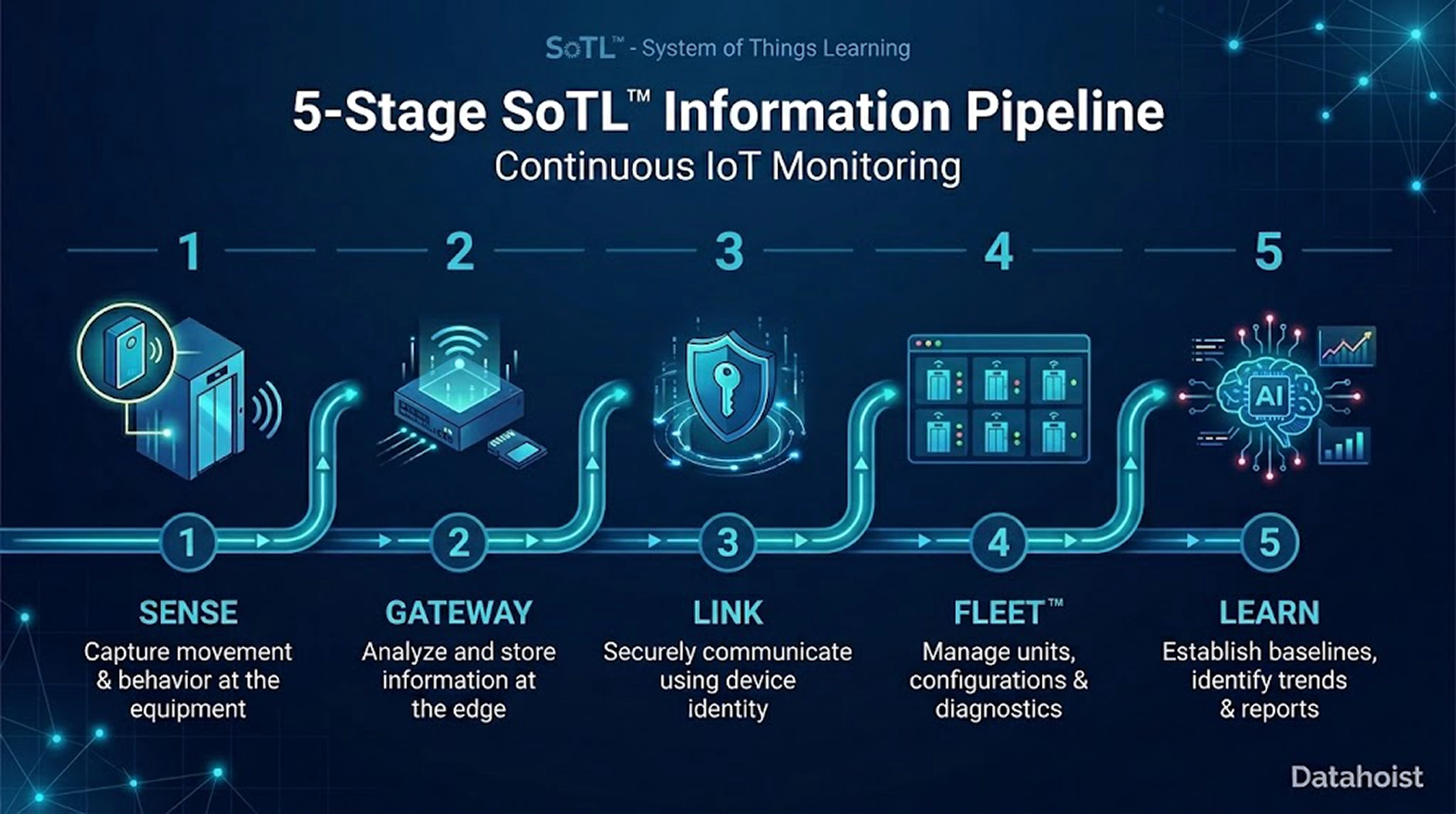
SoTL™ operates through a continuous, five-stage information processing pipeline—Sense, Gateway, Link, Fleet, and Learn—designed to transform raw physical movement into operational evidence
The 5-Stage Pipeline
-
Sense: Direct car-level sensing captures door cycles, car runs, vibration, and motion signatures where movement actually occurs
-
Gateway: Edge software processes raw sensor data locally, reducing network load while enabling remote firmware updates without site visits
-
Link: Outbound-only encrypted communication safely routes data through cellular or building Wi-Fi behind firewalls
-
Fleet: Centralized device management tracks live statuses, desired vs. actual device states, configuration changes, and audit trails
-
Learn: Analytics engines establish unit baselines, evaluate open/close and run/relevel trends, and build weekly performance reports
3. Inside SoTL™ Architecture
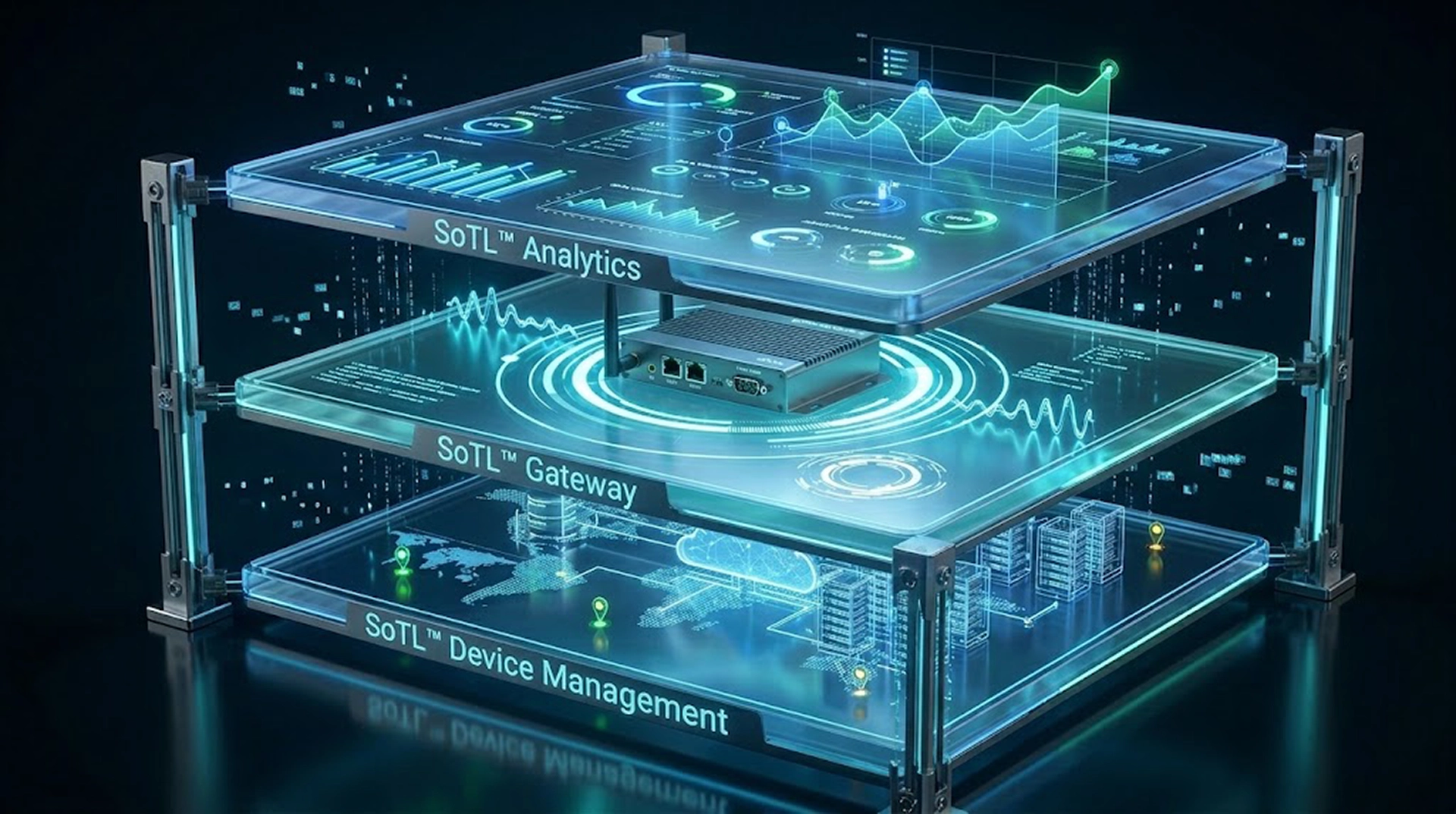
The SoTL™ architecture is structured into three integrated layers that connect field hardware, management software, and analytical intelligence
Core Architectural Layers
-
SoTL™ Device Management (Cloud Layer): Tracks online/offline status, operational modes (production, training, diagnostic), and configuration audit trails, automatically recognizing factory-enrolled units upon first power-up
-
SoTL™ Gateway (Edge Layer): Manages local data collection and storage during power or network failures, reducing noise before sending event summaries to the cloud
-
SoTL™ Analytics (Learning Layer): Evaluates equipment trends over time, distinguishing open vs. close cycles, run vs. relevel events, and actual vs. expected duty cycles
-
Remote Fleet Administration: Enables firmware updates, reboots, and diagnostic tweaks without requiring physical technician visits
4. SoTL5mini™ Hardware
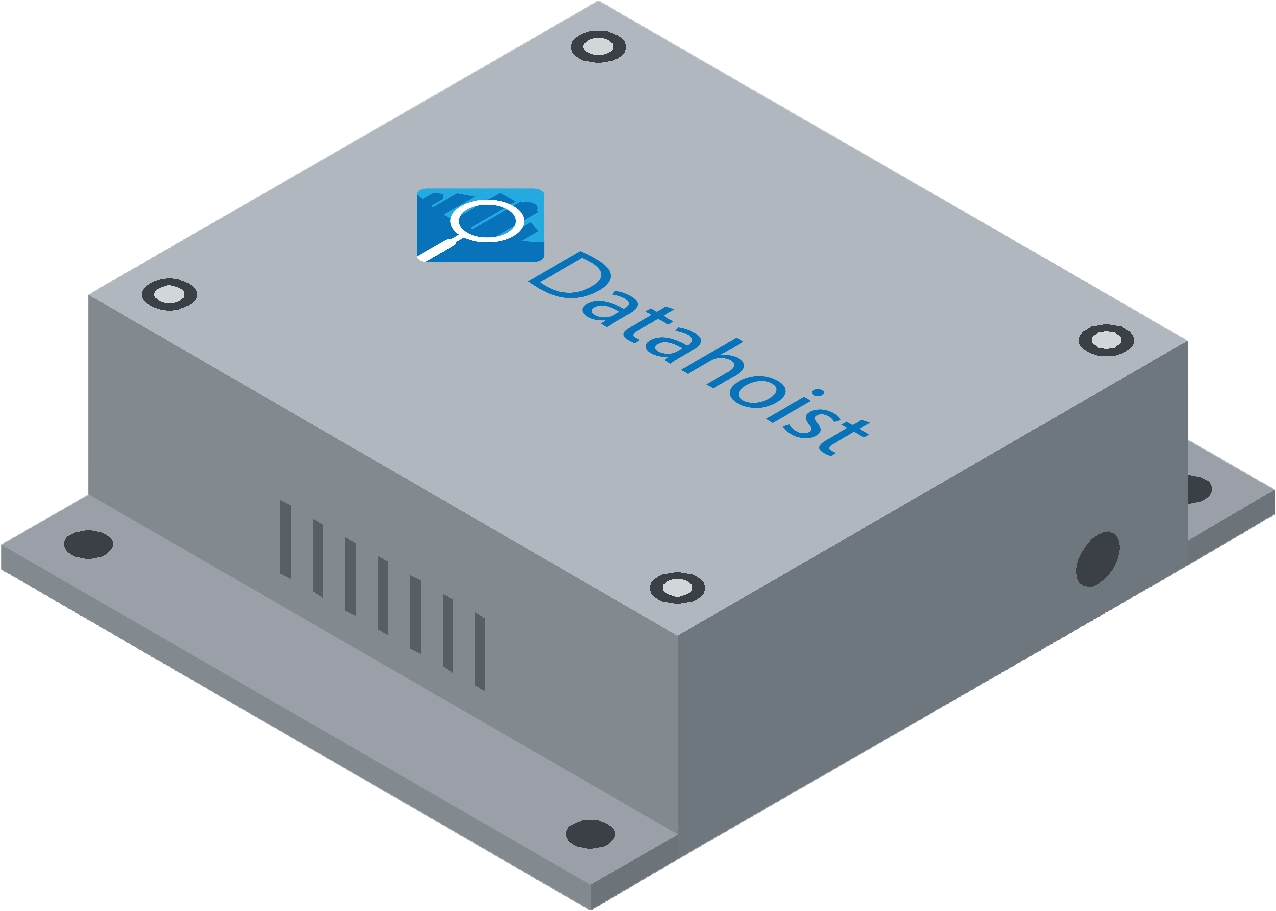
The SoTL5mini™ is a compact, door-mounted hardware unit running on the core SoTL™ platform, providing an efficient monitoring option for existing elevator assets without requiring a complex IT infrastructure project
Specifications & Features
-
Form Factor: Compact footprint ($95\times110\times28\text{ mm}$ with mounting flanges) designed for direct installation on elevator car doors
-
Comprehensive Tracking: Monitors up/down car runs, door open/close cycles, incomplete cycles, releveling, vibration, and motion signatures
-
Seamless Installation: Operates on 110 VAC car-top power (routed with door travel cables) and installed by certified elevator mechanics
-
Flexible Connectivity: Supports cellular or building Wi-Fi using outbound-only security protocols
-
Pre-Enrolled Security: Shipped with unique serial identities (S5M-prefix) that auto-register in the fleet management cloud upon initial power-up
5. Multi-Horizon Reporting
SoTL™ converts raw motion data into three distinct operational visibility horizons, serving different levels of organizational decision-making
Reporting Horizons
-
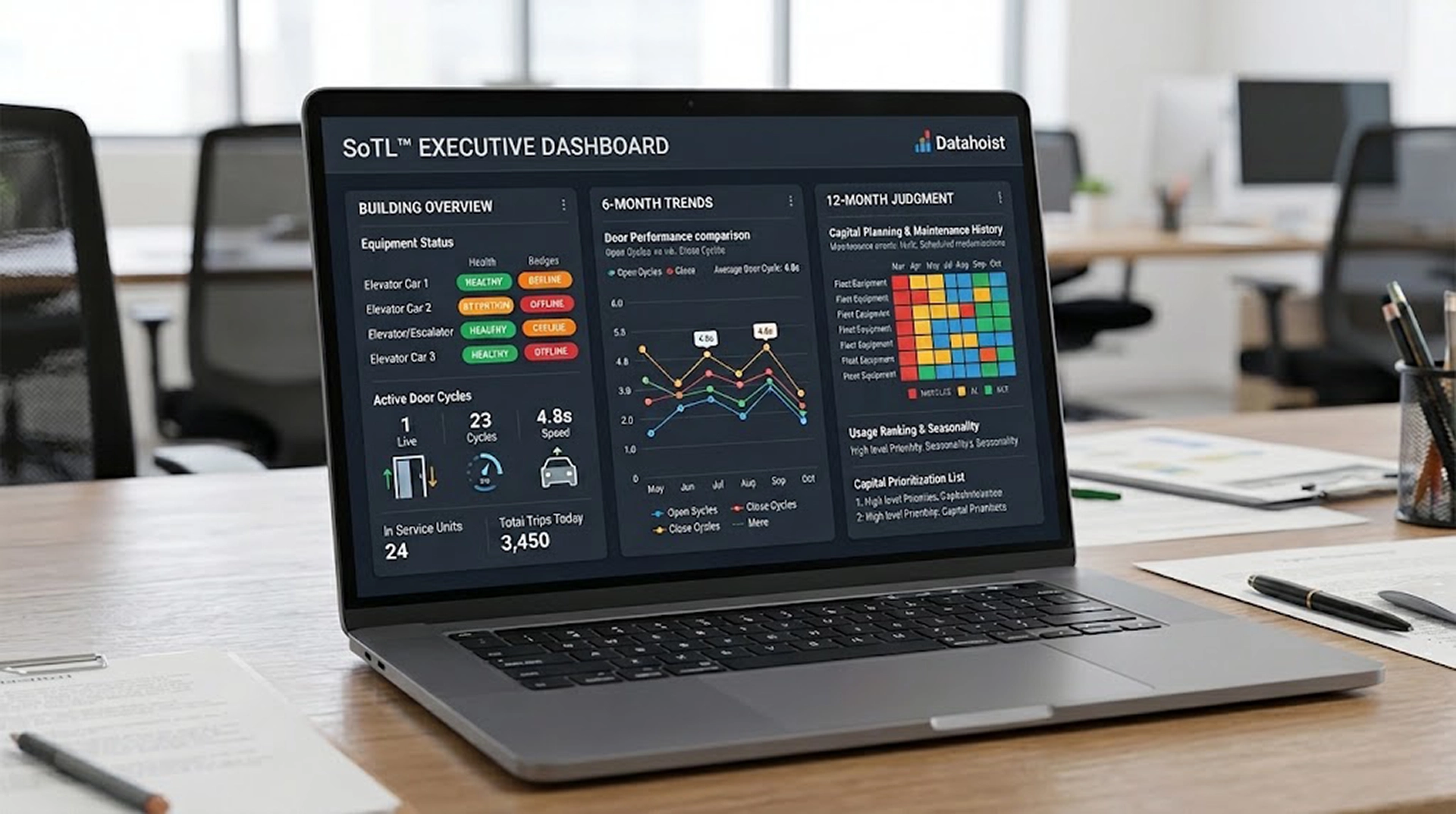
Building Overview (Immediate): Displays real-time equipment status, door cycles, incomplete closes, and baseline-derived health badges to identify weekly priorities
-
6-Month Trends (Developing Behavior): Tracks performance degradation over time (e.g., open vs. close or up vs. down modes) to provide lead time before tenant-visible faults occur
-
12-Month Judgment (Long-Term Capital Planning): Analyzes seasonality, verifies past maintenance quality, and measures duty concentration to support budgeting and modernization strategy
6. Flexible Attachment & Deployment Paths
Overview
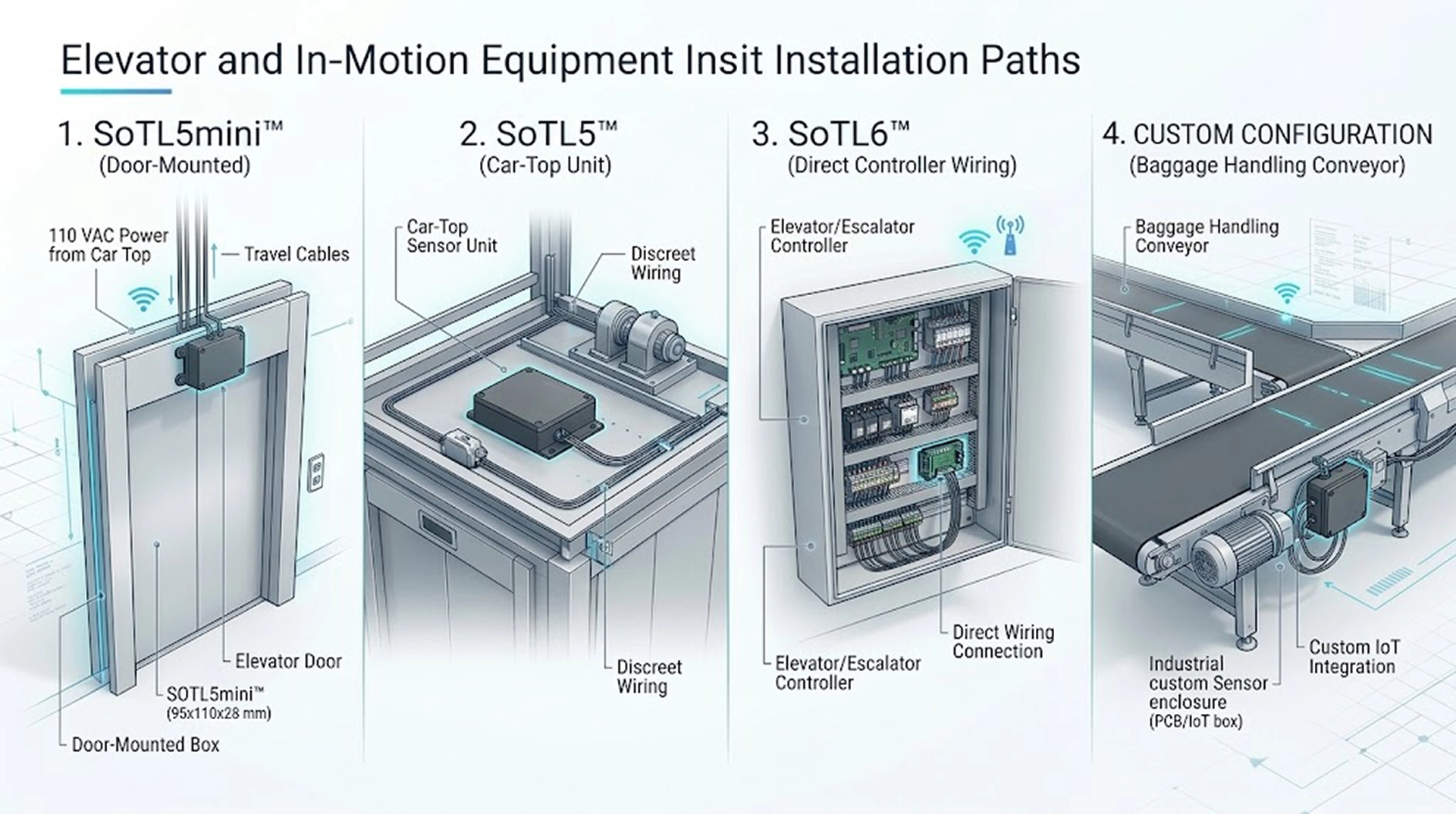
SoTL™ accommodates diverse equipment fleets through four flexible attachment approaches, allowing assets to feed into the same unified management system regardless of installation path
Attachment Options & Deployment Workflow
-
SoTL5mini™: Compact, car-door-mounted monitor ideal for rapid retrofits
-
SoTL5™: Cartop-mounted sensor package for traditional elevator deployments
-
SoTL6™: Direct controller connection for elevators, escalators, and complex machinery
-
Custom Configurations: Tailored sensor and controller integration for mixed or mission-critical fleets (such as airport baggage handling)
-
Simplified Deployment Process: Begins with asset assessment and certified mechanic installation, followed by automatic cloud enrollment and baseline learning—all without requiring special network configurations or open inbound ports